Spaces with Soul
On what makes a house feel like home
There are some spaces you walk into and immediately understand. Not because they are perfectly styled, or particularly on trend, but because they feel settled. There is a sense of ease to them. Nothing is trying too hard. Nothing is there simply to impress. They feel, quite simply, like they belong. I have always been drawn to these kinds of interiors.
Spaces that reveal themselves gradually. That carry a sense of the people who live within them. That feel layered, not assembled. They are rarely perfect, and that is precisely their strength. Because what we respond to most in a home is not how it looks, but how it makes us feel.
It might be the way light moves through a room at a particular time of day. The familiarity of materials that soften and age over time. A chair that has been moved and used and lived in, rather than positioned and left untouched. These are the quiet details that give a space its depth. Its soul.
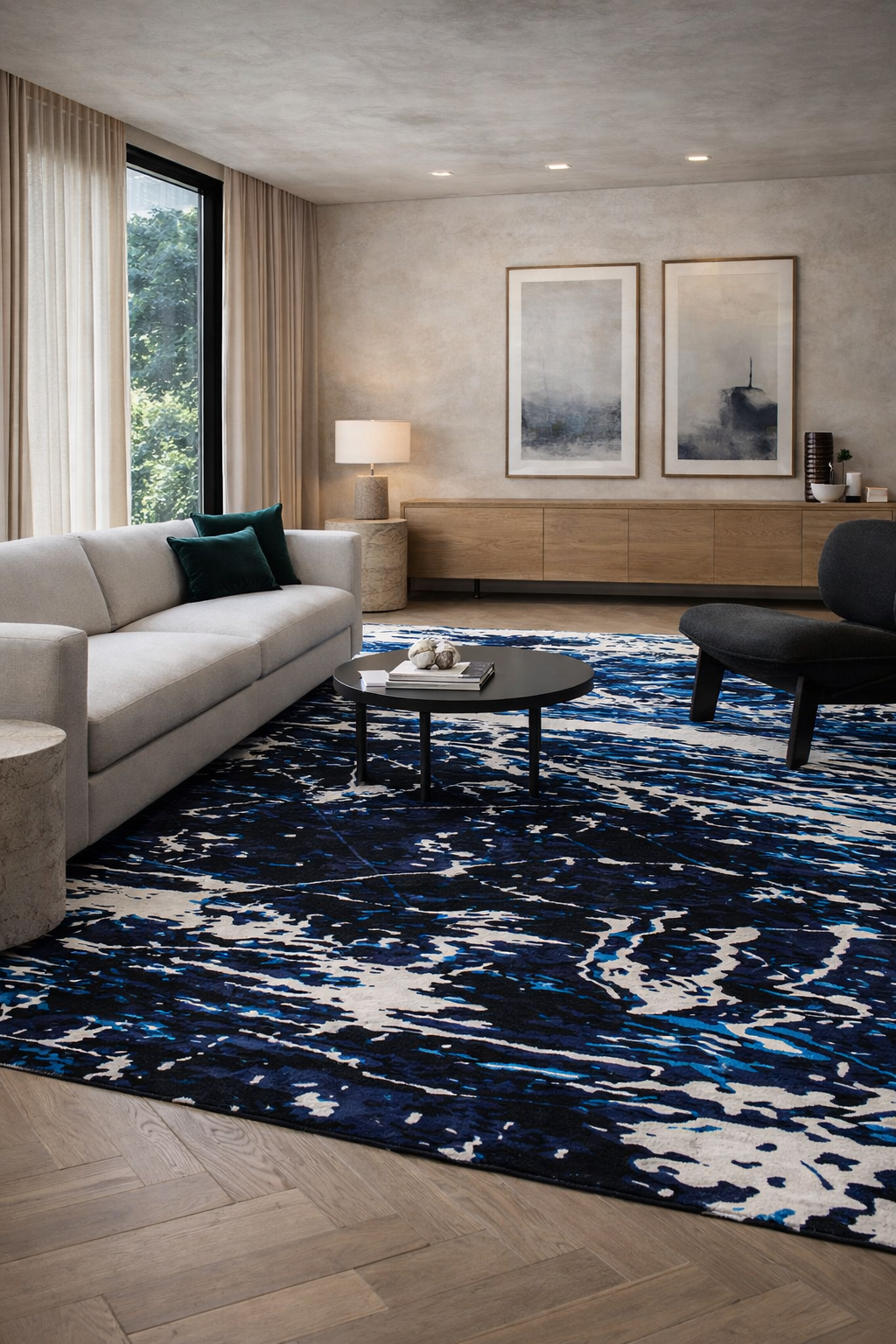
Anchored by Scratches Indigo, a rug from the St James Whitting collection, the space draws energy from its inky blues — bringing movement and contrast to an otherwise restrained interior.
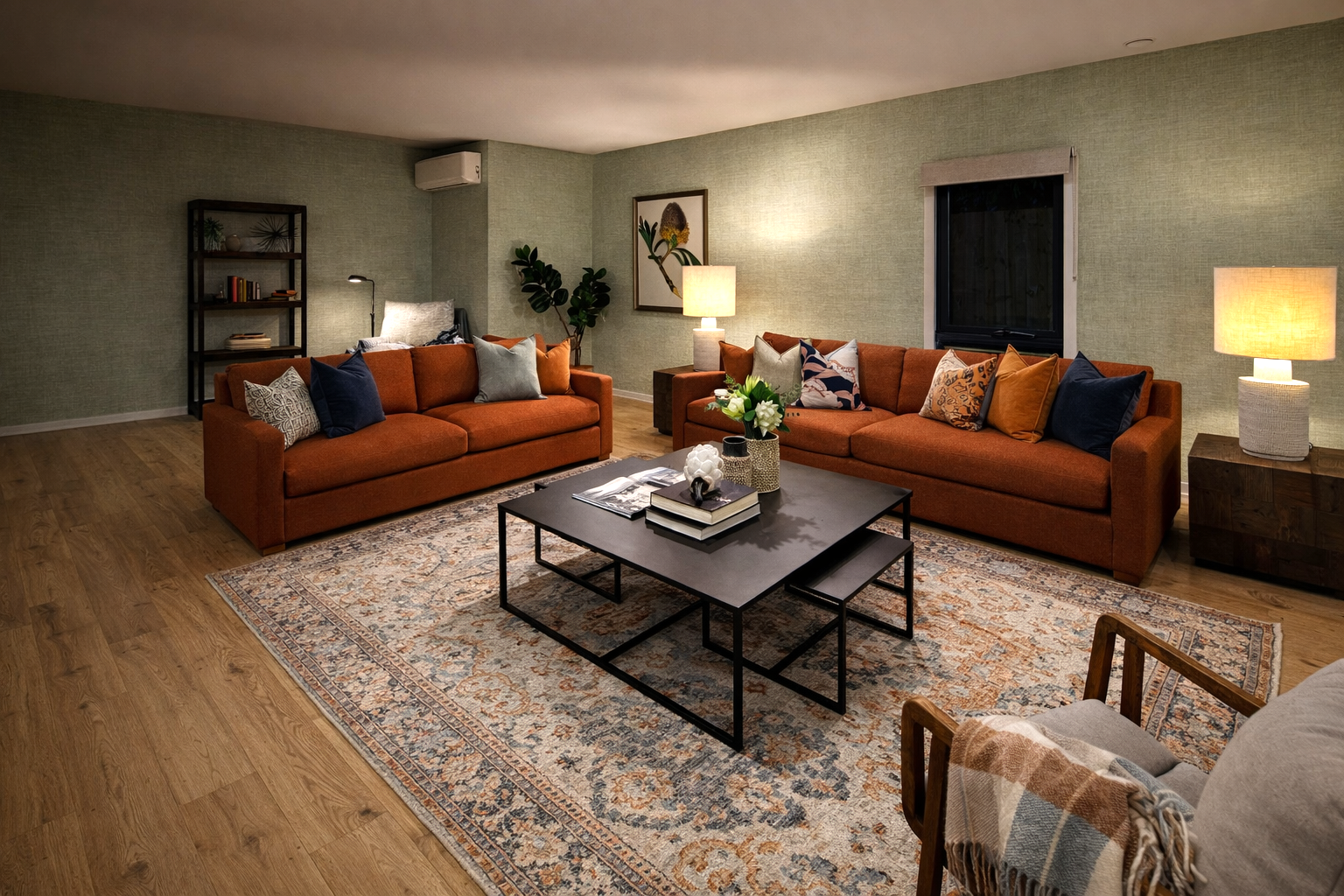
A room that embraces colour, texture and pattern — where layered elements come together to create warmth, character and a sense of lived experience.
In contrast to the highly resolved interiors we see so often, these spaces are less about control and more about connection. They allow for life to unfold. For objects to be added, removed, and rearranged. For a home to evolve in response to the people who inhabit it. Because a house is not a static composition. It is a living environment. And like anything that lives, it changes.
Over the years, I’ve come to understand that the most enduring interiors are not those that follow a fixed vision, but those that allow for flexibility. They are designed with intention, but not rigidity. They leave room for the unexpected—for memory, for personality, for time.
This is where design moves beyond aesthetics. Where it begins to support something deeper. A sense of comfort. Of familiarity. Of belonging. It’s not something that can be fully designed in a single moment or captured in a photograph. It emerges gradually, through use and experience, through the accumulation of small decisions that reflect a life being lived.
And perhaps that is what we are really seeking. Not perfection, but resonance. A space that feels aligned with who we are, and how we want to live. A space that, over time, becomes entirely our own.