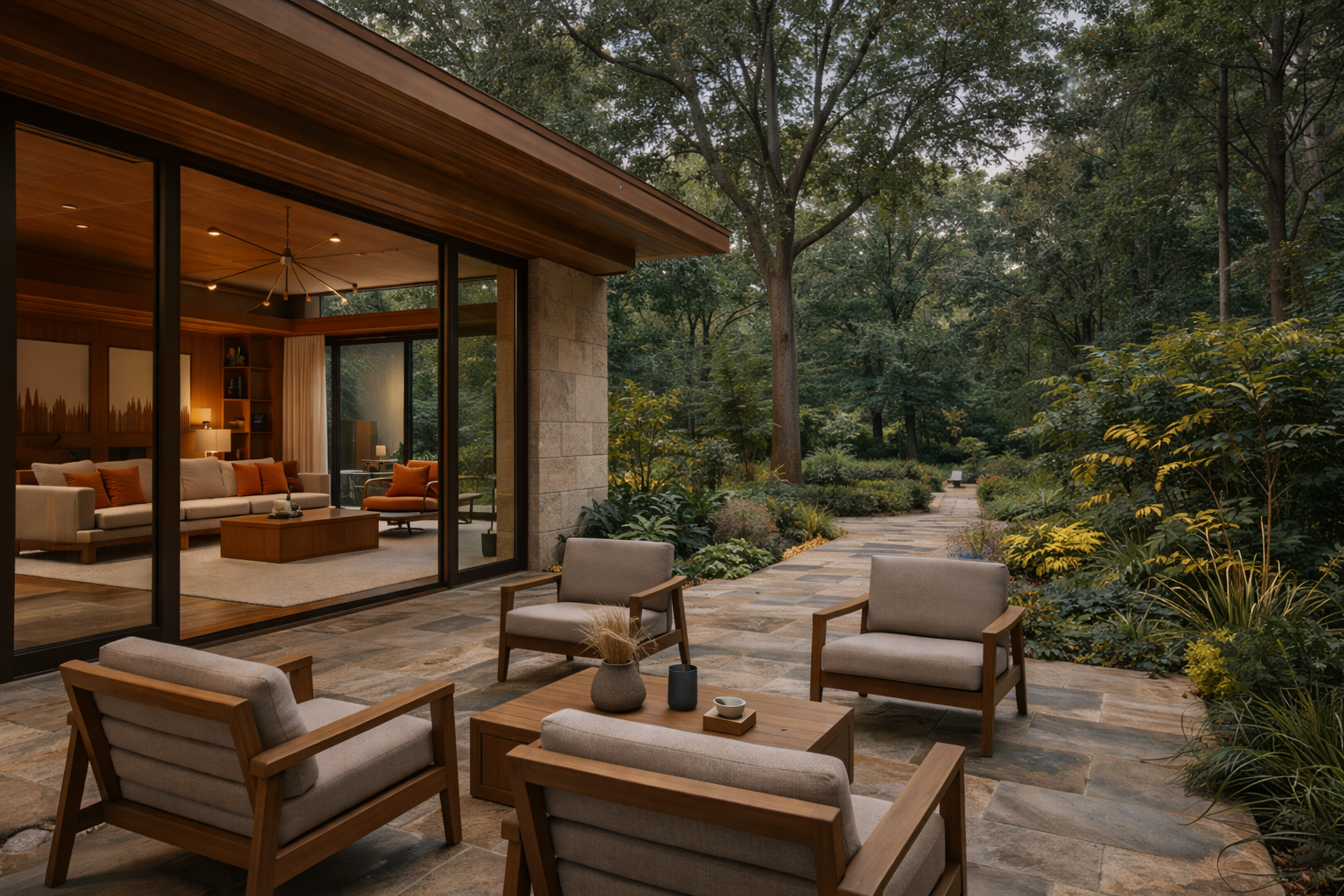
A House That Settles Into the Landscape
Mid-Century Living, Reconsidered
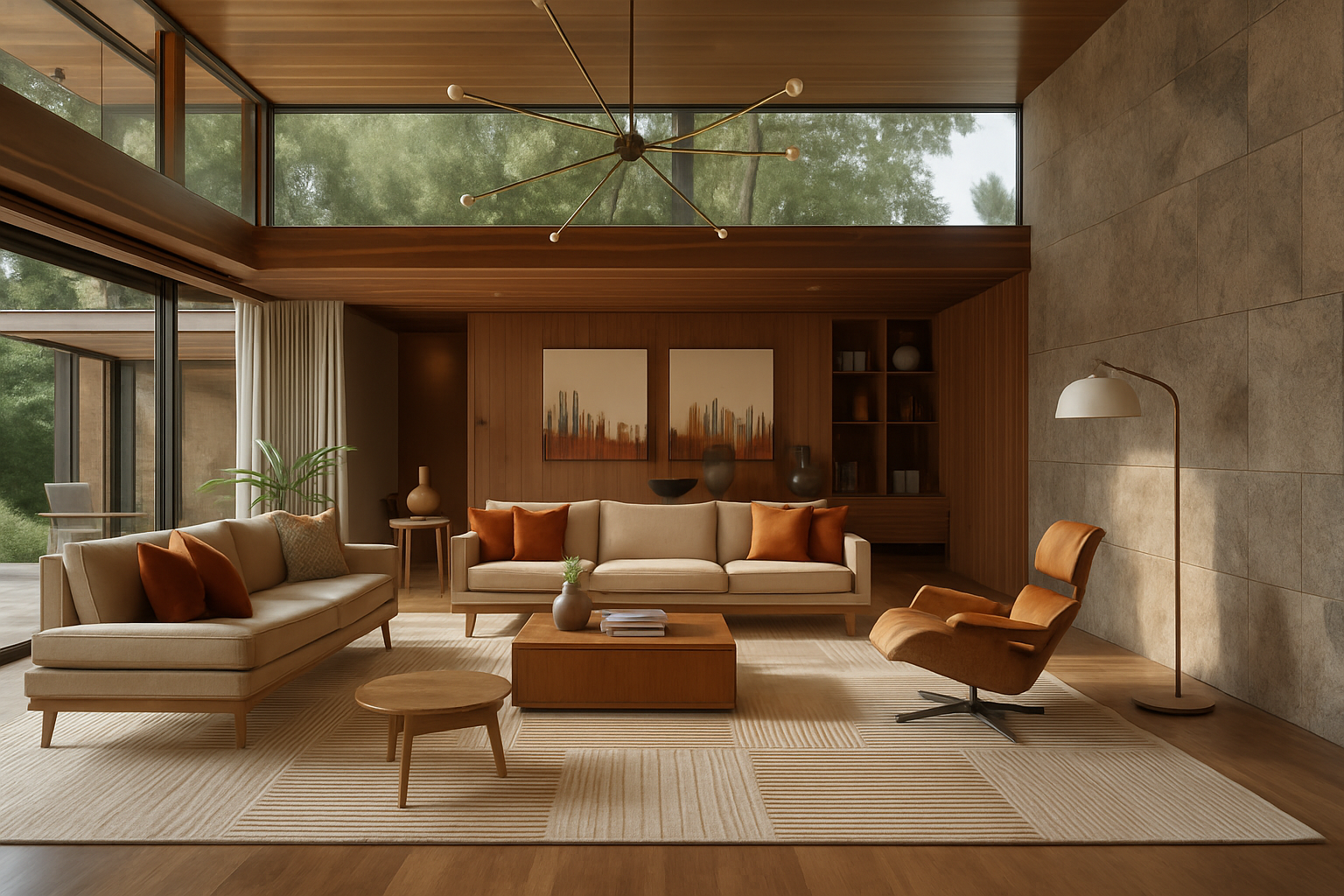
A composition of timber, stone and clean lines — where mid-century principles are expressed through structure, proportion and material honesty.
There’s something deeply reassuring about a house that doesn’t try too hard. I’ve always
loved the mid-century style and wanted to create a warm, inviting and timeless look that would work as perfectly in today’s era as it did in the past.
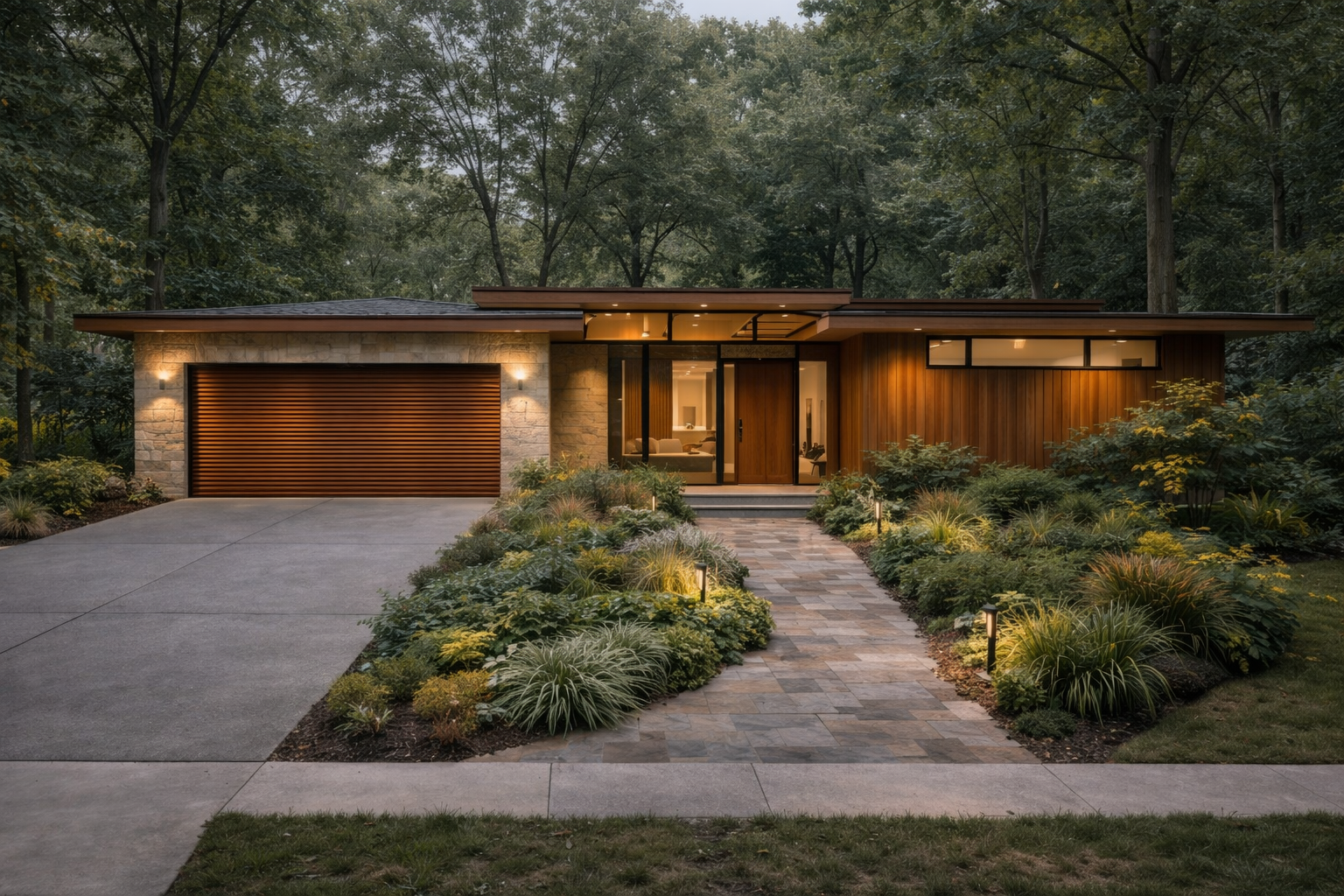
Framed views and material continuity create a seamless dialogue
between the built form and its surroundings.
A paved pathway leads to the front door, flanked by planting that feels established rather than designed. It’s a subtle distinction, but an important one. This is a home that understands time.
A paved pathway leads to the front door, flanked by planting that feels established rather than designed. It’s a subtle distinction, but an important one. This is a home that understands time.
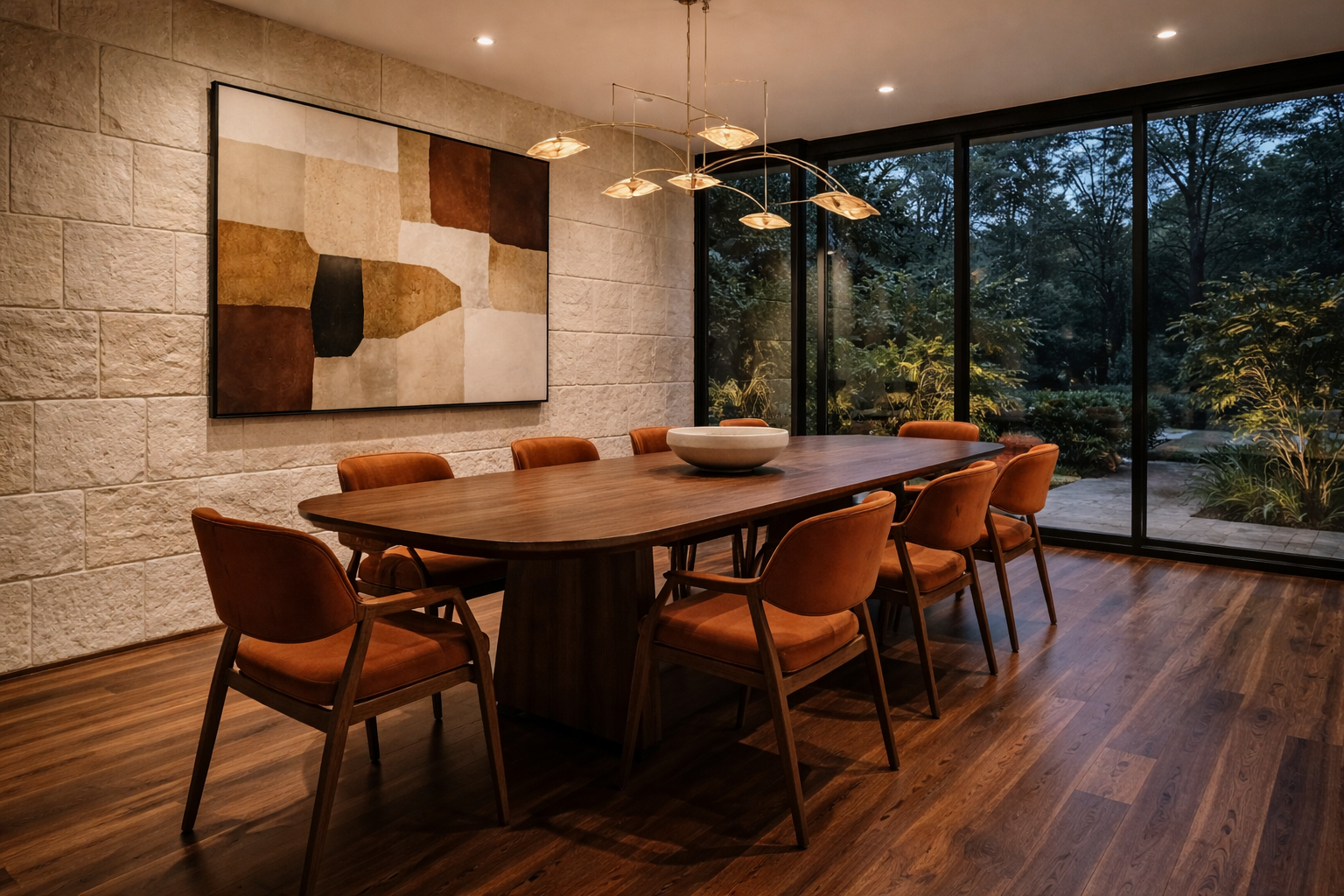
Simple forms and honest materials create a dining space
that feels both grounded and quietly refined.
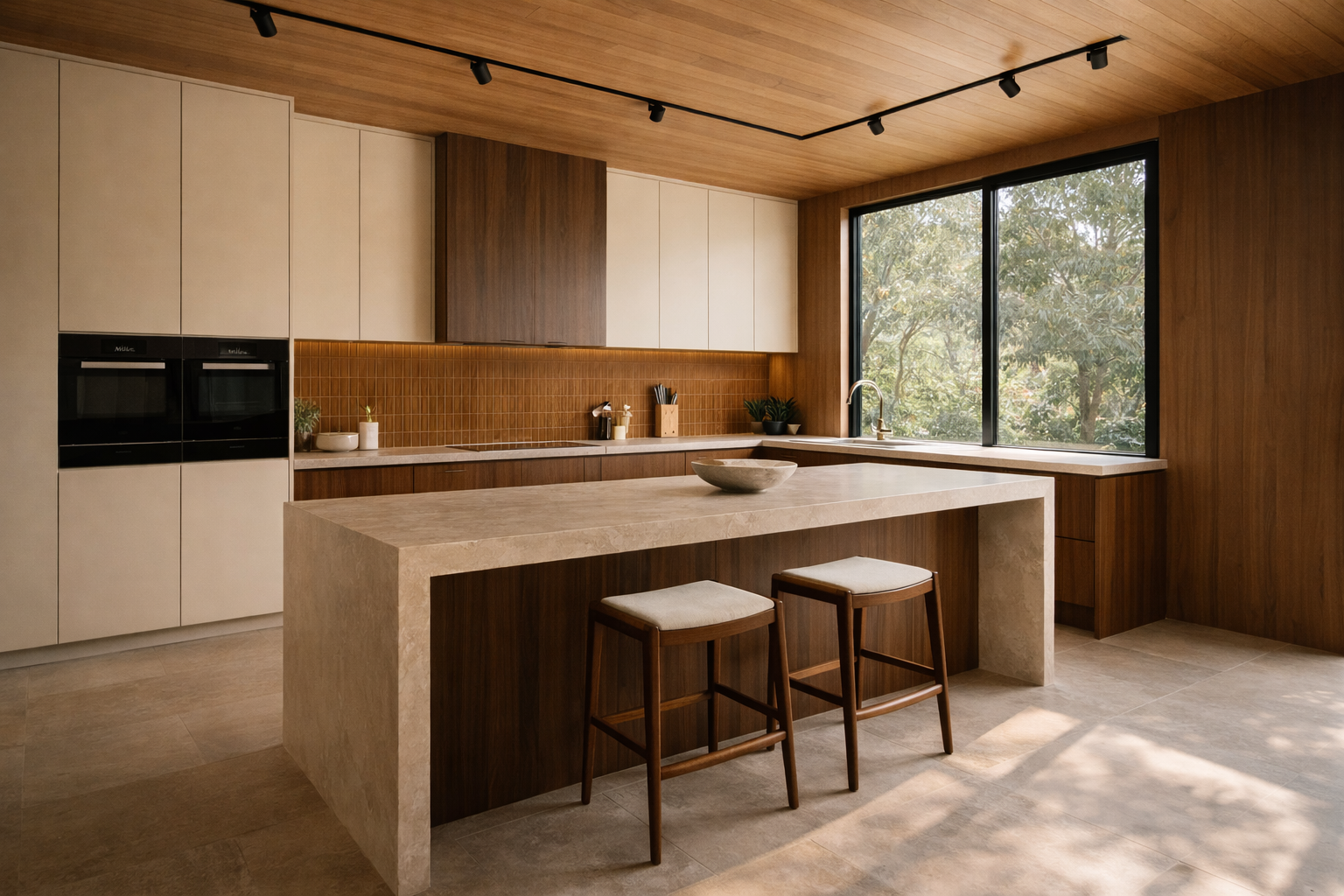
A restrained palette and precise detailing allow the materials to speak, reinforcing the enduring logic of mid-century design.
of cream cabinetry. The palette is warm, but never heavy. Light moves easily through the space, catching the subtle variation in the stone and the grain of the timber.
Nearby, the dining area takes on a slightly more intimate tone. Set against a textured wall, a long walnut table is surrounded by chairs upholstered in a rich, burnt tone; a nod to the era, but handled with restraint. Above, a sculptural light introduces a moment of softness, its form contrasting gently with the solidity of the materials below.
Inside, the house opens gently rather than dramatically. The living space is anchored by warmth, not just in colour, but in texture. Timber-lined ceilings and joinery create a continuity that carries throughout the home, while soft neutral furnishings are layered with deeper tones of rust, ochre and tobacco. These are colours that don’t date; they settle. Large panes of glass dissolve the boundary between inside and out, allowing the garden to become part of the daily experience. It’s not just a view, it’s a presence.
The kitchen continues this language with quiet confidence. A monolithic travertine island sits at its centre, solid and tactile, balanced by finely detailed timber joinery and a restrained use
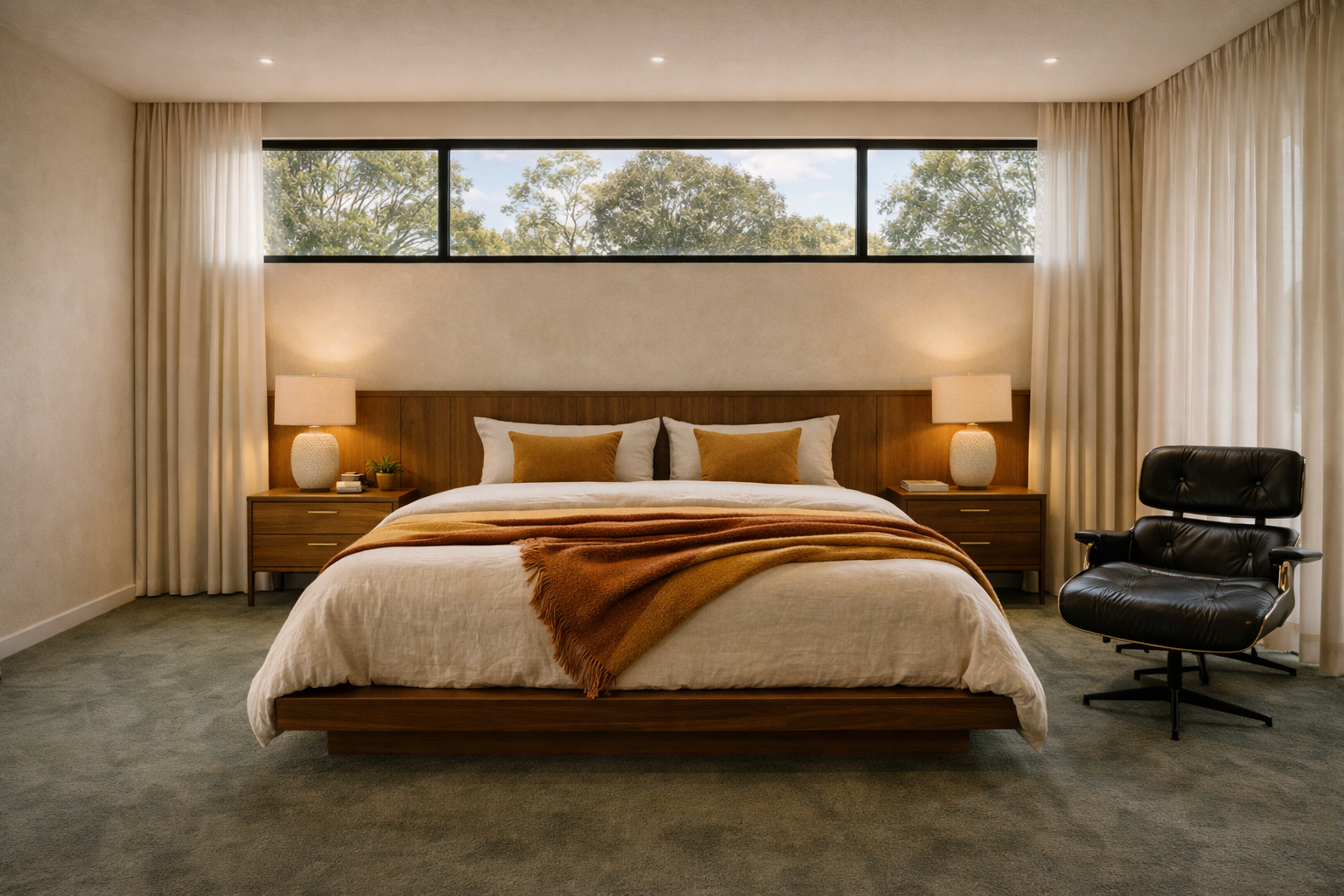
A calm, resolved space where natural materials and clean lines
create a sense of rest and continuity.
The architecture extends naturally into the landscape, reinforcing the
mid-century principle of connection between indoors and out.
My idea for the design for this mid-century home sits quietly within its landscape, not as an object placed upon it, but as something that feels as though it has always belonged. Mature trees frame the architecture, softening its edges, while a gently layered garden draws you in from the street — not with symmetry or show, but with a sense of ease.
From the outset, the material palette sets the tone. Timber, stone and glass are used with restraint — not as features, but as foundations. A slatted timber garage door sits comfortably alongside stonework and vertical cladding, while the low, horizontal roofline reinforces that unmistakable mid-century clarity.
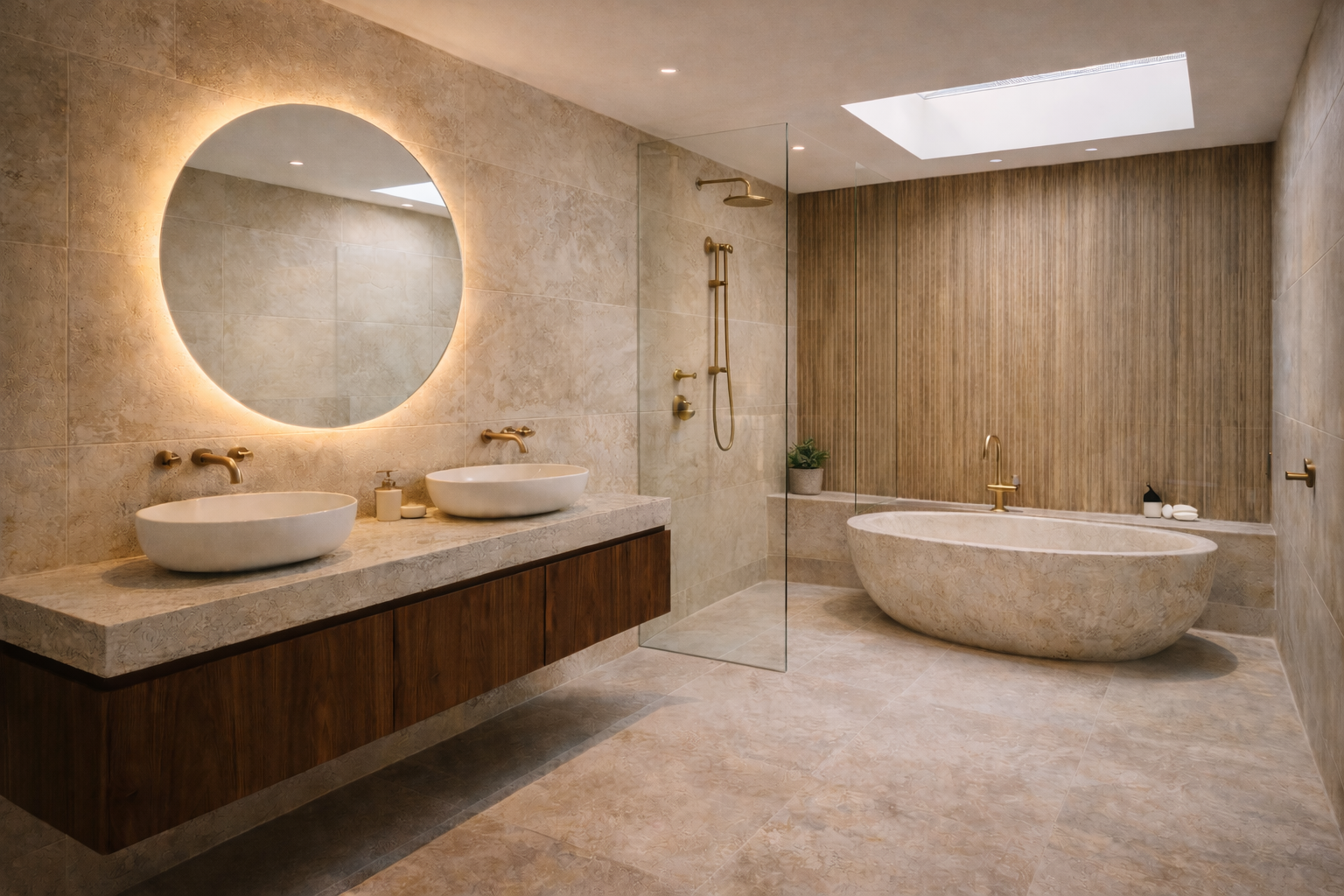
A focus on texture and natural finishes elevates the bathroom beyond utility, aligning it with the home’s broader architectural language.
What ties the house together is not a single gesture, but a consistency of thinking. There is a discipline to the way materials are used, a restraint in the palette, and an understanding that good design doesn’t need to announce itself. It simply needs to work — over time, in changing light, and as life moves through it.
This is not a reinterpretation of mid-century design. It’s a continuation of it. And perhaps that’s why it feels so resolved.
The private spaces shift again — not in language, but in mood. In the bedroom, the palette softens to a more muted composition of cream, timber and warm neutrals. A low platform bed sits beneath a horizontal window line, reinforcing the home’s connection to the landscape. The addition of deeper tones — a throw, a cushion — is enough to bring depth without disrupting the calm.
The bathroom follows a similar approach, where material takes precedence over decoration.
Stone surfaces, timber detailing, and brushed metal fixtures create a space that feels grounded and enduring. A freestanding bath, positioned with intention, becomes less of a statement and more of a place to pause.