Parisian Apartment Study
A contemporary reading of a Haussmann interior
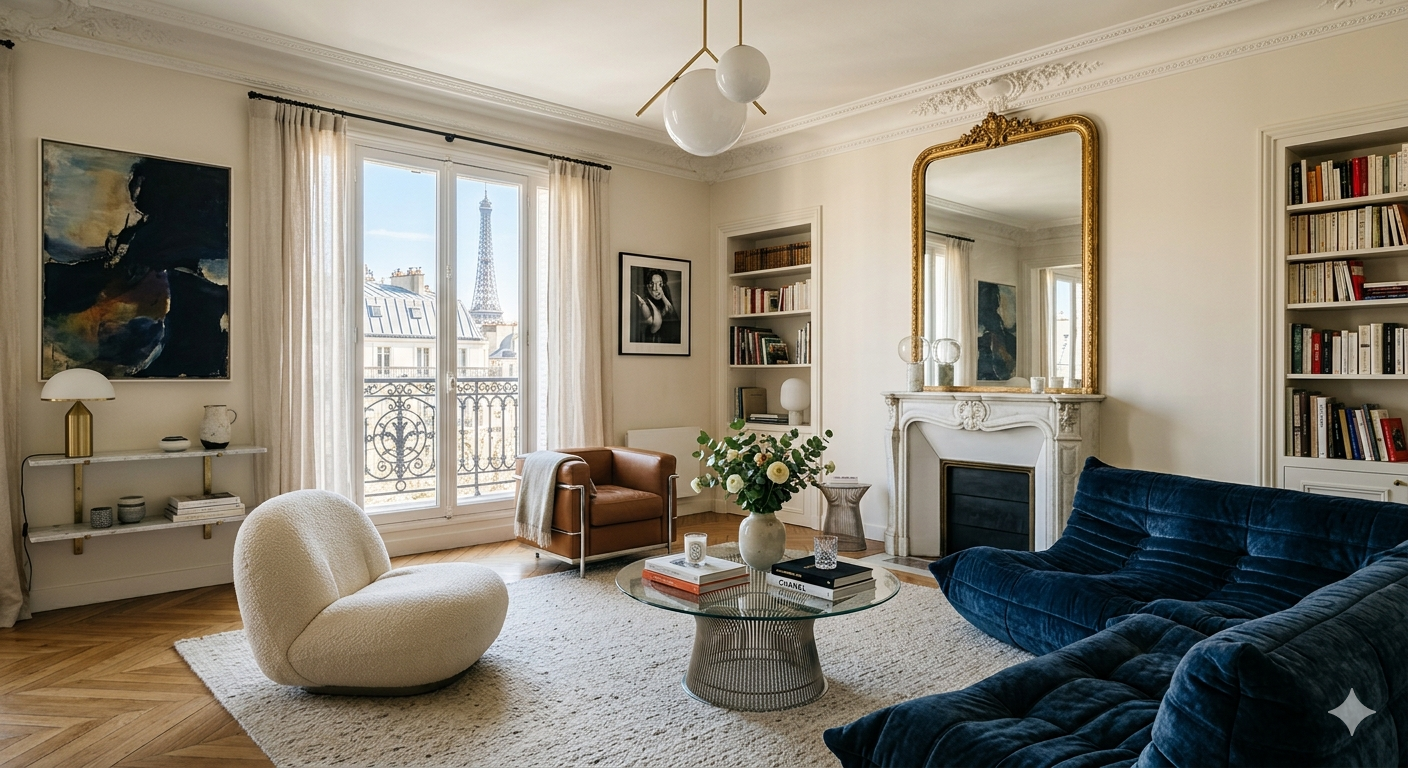
This is where the balance becomes more apparent. Classic Parisian elements sit alongside more relaxed, sculptural pieces—timber, boucle, and deep upholstery—bringing a sense of ease to what could otherwise feel overly composed.
This is a project still in progress—more of a study in direction than a resolved outcome.
The intention was to explore how a classic Haussmann interior might be gently reinterpreted through a more contemporary, Australian lens. Not by stripping it back, but by working with what already exists—allowing the architecture to lead, and introducing a quieter, more liveable layer within it.
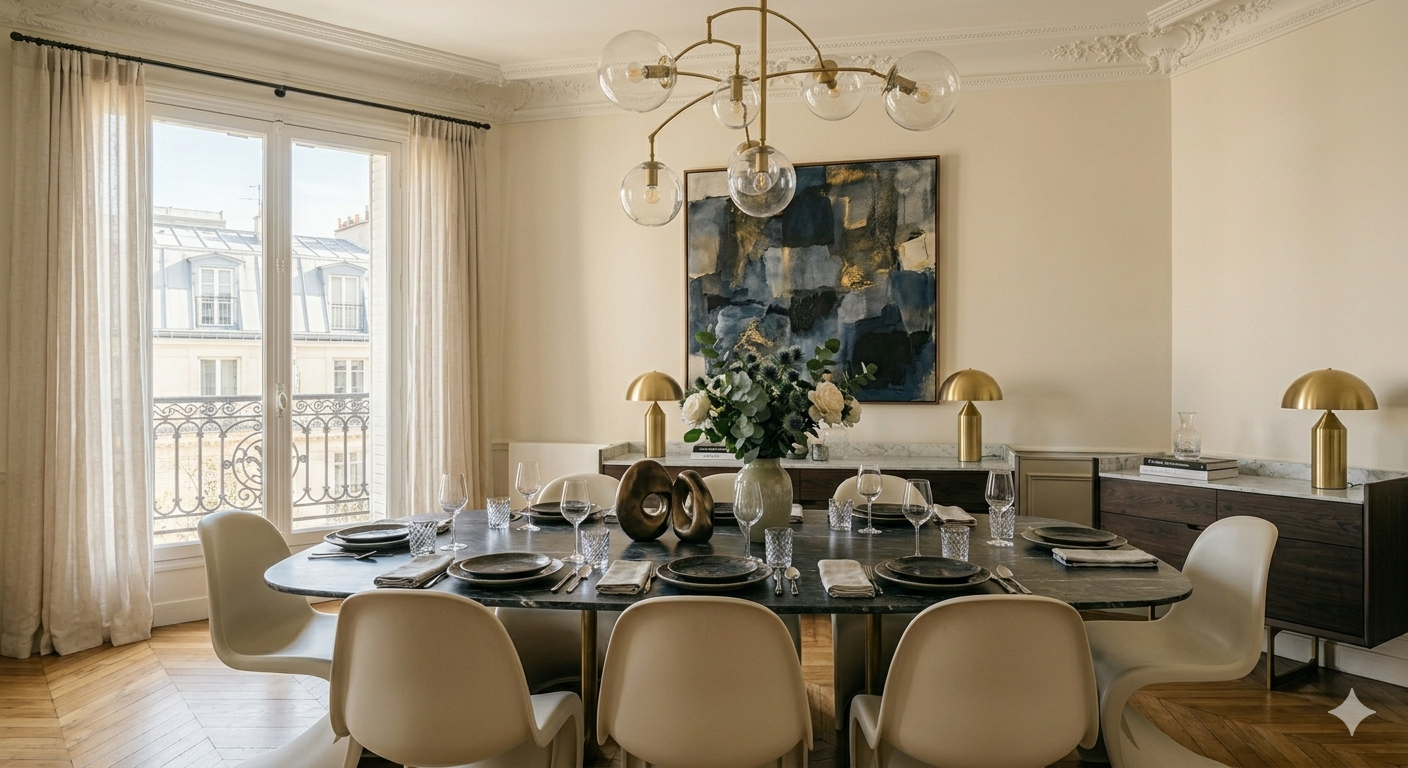
The architecture sets the tone here—ornate, structured, inherently formal. The intervention is deliberately quieter. A contemporary table and lighting soften the room, allowing the original detailing to remain the primary gesture.
Perhaps there’s also something more instinctive at play here. I’ve always been drawn to this kind of architecture—the proportion, the detail, the sense of permanence. Some of that may well come from my own background—growing up in England, surrounded by classical buildings, and with family ties to northern France. Whatever the source, these interiors have always felt familiar to me. Not foreign, but quietly understood.
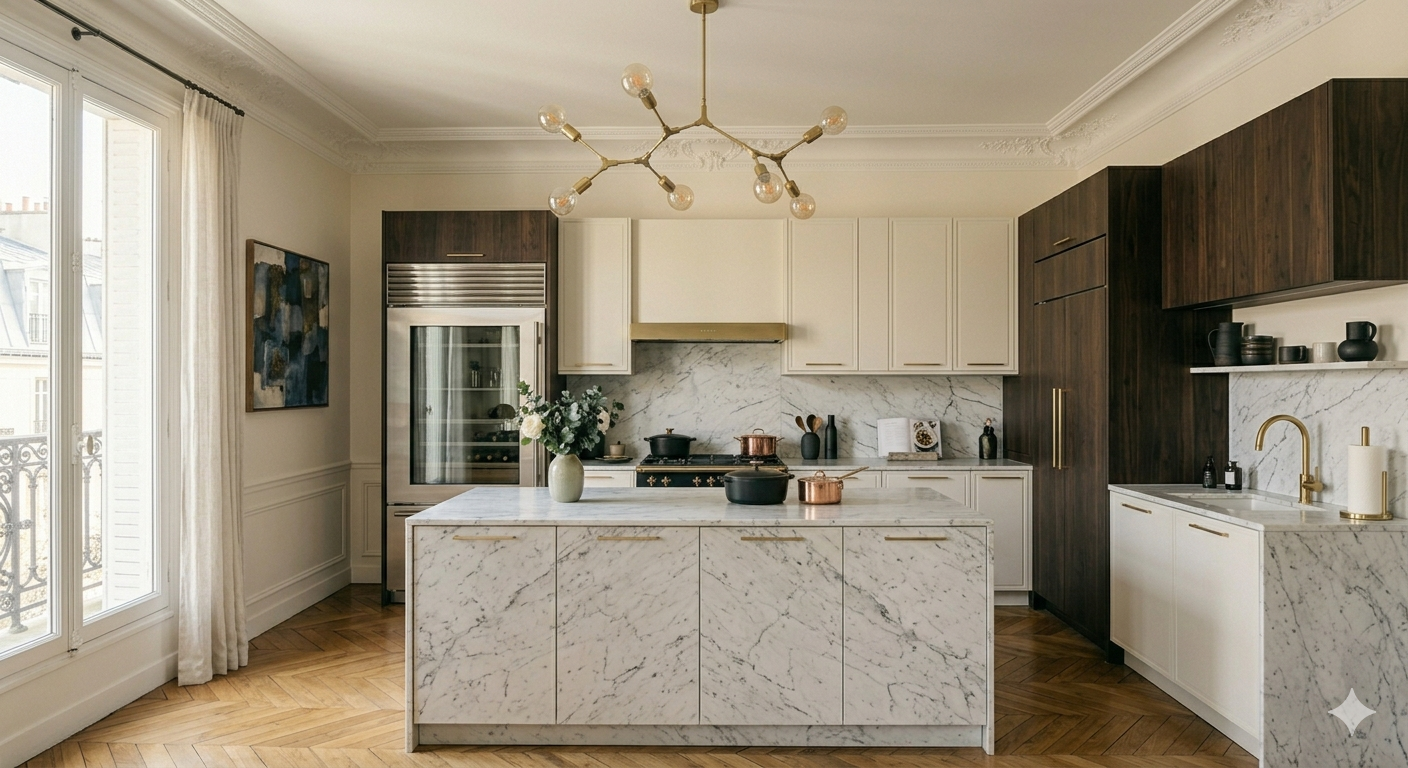
Here, the approach shifts slightly—still restrained, but more resolved. Marble and timber are used in contrast, with detailing kept minimal. The aim was to create something contemporary without losing the integrity of the surrounding architecture.
The bedroom, in particular, is anchored by a simple four-poster form, designed to sit comfortably within the existing envelope rather than compete with it. From there, the palette softens—layered textiles, muted tones, and artwork that reads as part of the architecture rather than decoration.
Across the scheme, the balance sits between structure and softness. Original detailing remains intact, while materials—timber, linen, marble—are used with restraint to bring warmth and continuity.
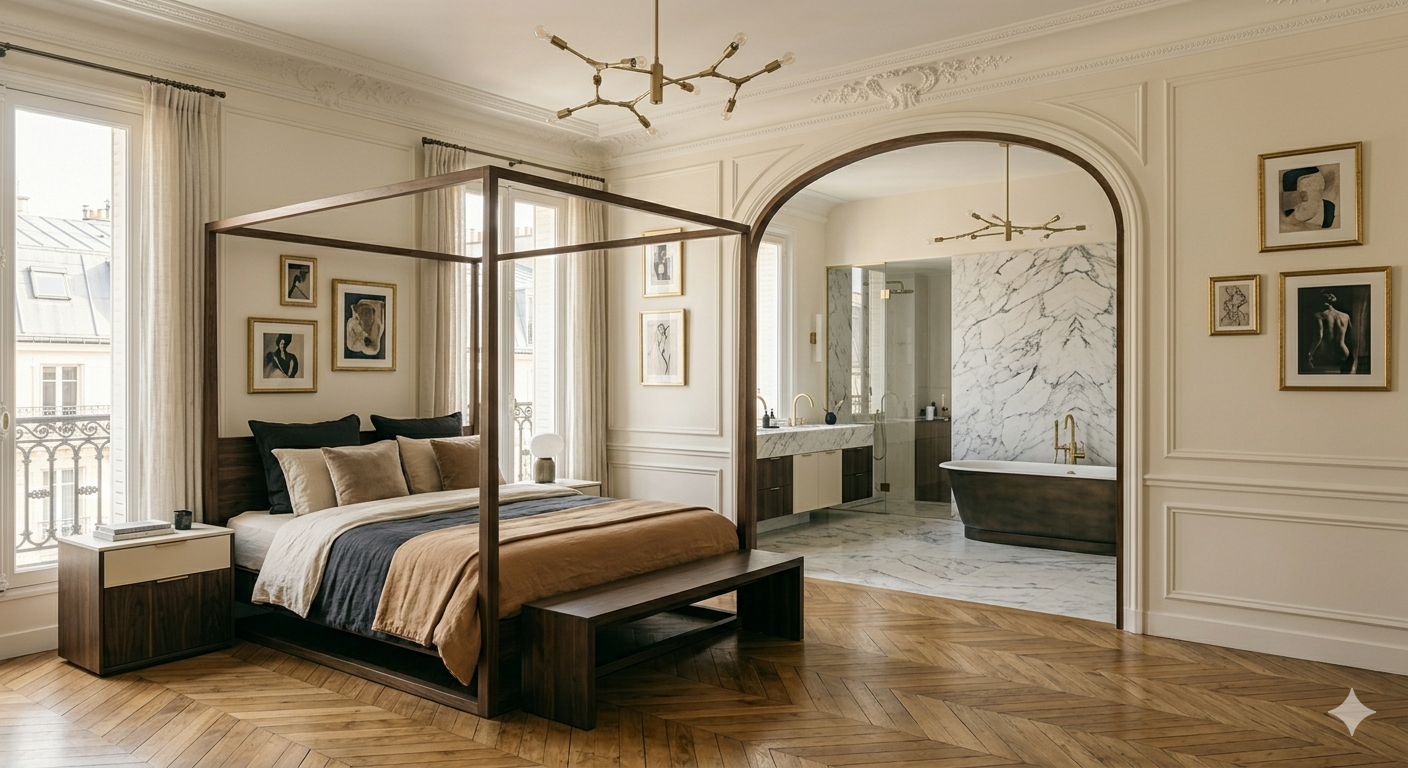
The bedroom is anchored by a simple four-poster form, chosen for its clarity rather than decoration. Beyond, the ensuite reads as a continuation—an opening rather than a separate space—linking the two through material
and proportion.
These images represent a direction I continue to return to: a more relaxed expression of luxury—one that feels considered, not imposed. Not finished. But heading somewhere
worth exploring.
I’ve always been drawn to this
kind of architecture—
the proportion, the detail,
the sense of permanence.
In the ensuite, the approach becomes more distilled. Marble is used deliberately, concentrated into a single gesture rather than repeated. The rest of the space is intentionally quiet—integrated, minimal, and resolved.
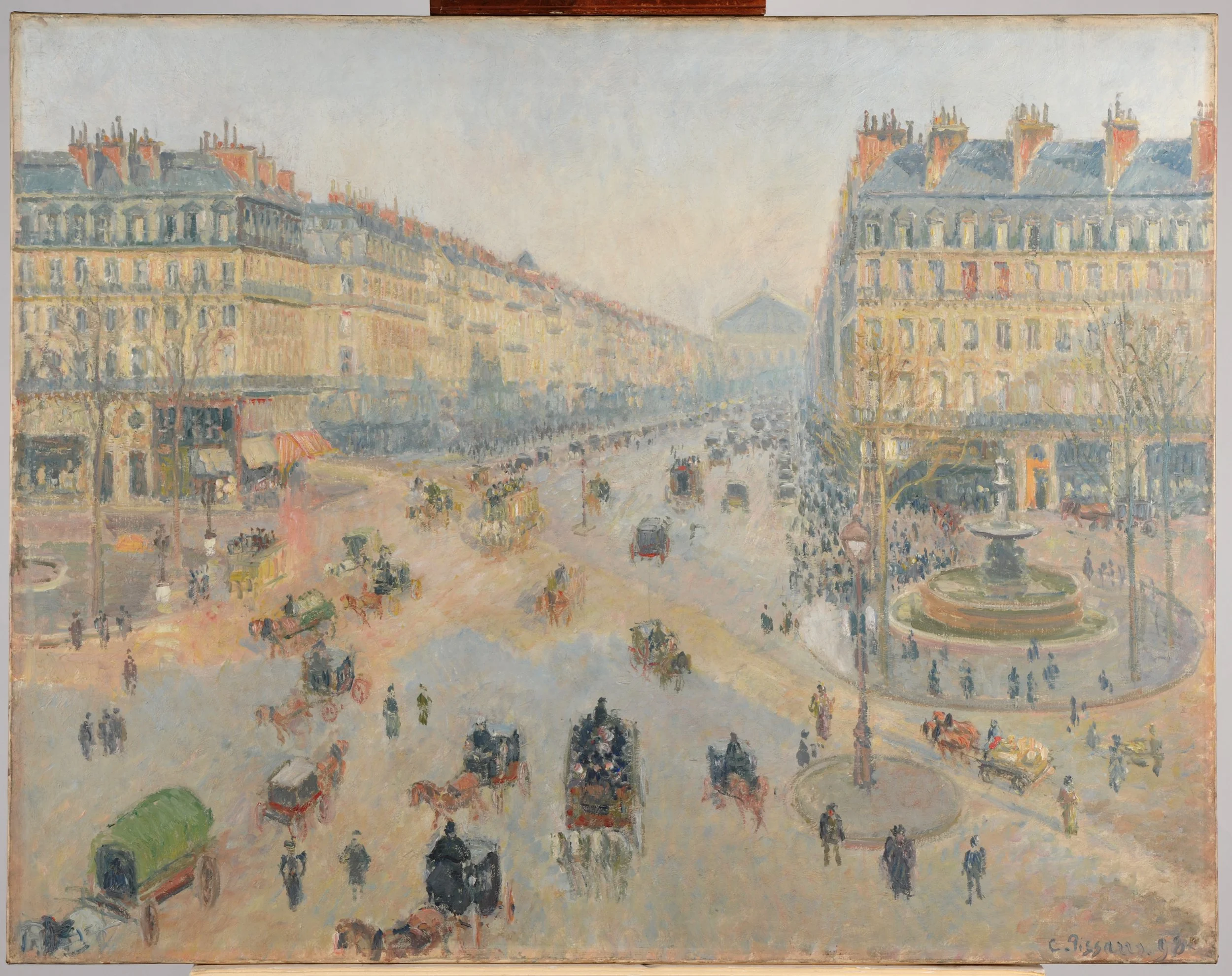
Napoleon III instructed Haussmann to bring air and light to the centre of Paris, to unify the different neighbourhoods with boulevards, and to make Paris more beautiful. The Avenue de l'Opéra, created by Haussmann, painted by Camille Pissarro, 1898.
Camille Pissarro - Musée des Beaux-Arts, Reims